Anti-Semitism and extermination in the Réflexions sur la question juive by Sartre

The analysis of the complex reasons of the negative emotional tendencies that strike Jews, developed by Sartre in his Réflexions sur la question juive of 1946, appears of great interest, at least for two main reasons. On the one hand, because the silence about the theme of extermination, that characterizes the pages of this essay, makes of Sartre the ideal type of the European intellectual of the post-war period, unable to catch the rupture represented by the Jewish genocide. Sartre, therefore, represents the difficulty in understanding, unlike a few rare “smoke detectors” made, for example Arendt and Adorno, the historical caesura represented by Auschwitz, that obliged us to reconsider the very concept of civility, and after which, as Adorno wrote, to write a poem after that would have been an act of barbarism. Thanks to his work, he gave us back, even if unconsciously, that cultural climate which characterized Europe during the immediate postwar period, a period marked by the incomprehension of the epochal importance of extermination. Secondly, the analysis contained in the Réflexions are worthy of interest especially because of their ability in painting a faithful picture of anti-Semitism and, in particular, of the anti-Semite. In these pages, perfectly portrayed is the phenomenology of anti-Semitic racism, in which not only the traditional explicative models usually used in the historic analysis of anti-Jewish prejudice, such as the “scapegoat” or the “collective identification” are confirmed. Reflexions over anti-Semitism are paradigmatic of the more general mechanics concerning the disclaiming of otherness. That is what makes of the Réflexions sur la question juive a text of great modernity.

Go to whole essay

Auschwitz memory between denial and simulation

If the First World War gave origin to the mass witnessing, the Holocaust has produced a corpus of memories which has no a comprehensive bibliography. The stories of the false witnesses, discussed in this work, fit in the context of the history of witness and, in particular, in the evolution of the Holocaust memory. The false survivors are the witnesses of a trauma that has penetrated the social discourse, after the Eichmann trial has inaugurated the “witness era” turning the genocide victims into the victims in excellence. The pressure of denial, which requires both the witness and the historical to provide the proofs, prevents, however, to evaluate the effectiveness of a simulation suggesting, inevitably, the issue of authenticity. Nevertheless, some scholars have welcomed the simulated memory as an alternative to the total lack of memory that may occur after the disappearance of the last true witnesses. Through this perspective, the false survivor Binjamin Wilkomirski, which, after all, does not propose a false memory, but a simulated memory, could be considered the meta-witness of our post-modern times, the one who has not seen directly but has received a vision. However, the risk of such an operation is that the Holocaust becomes a metaphor for what is outside of history and that false memories are no longer distinguishable from authentic witnesses. Of the various scenes of the genocide memory, I examined the current age of post-memory in which, in my view, the texts of false witnesses take their historical and literary dignity. The analysis, after an initial presentation of the three most complex cases of perjury, follows the reflection on memory developed in the United States and Canada. A critical review of sources, combined with the work of eminent scholars of the Holocaust, has made possible to understand the role of historiography and literary topos of the Holocaust in the construction of collective memory, deepening further the relationship between narrative, authority and truth.

Beyond Auschwitz: the camp between biopolitcs and legality

In front of the horror of the concentration camps, it would be necessary to wonder not only how it was possible to commit similar atrocious crimes against human beings, but above all it would be necessary to understand on which legal basis this could have happened. What happened in the camps cannot be read applying the classical juridical classification, because of the nature of the concentration camp, that looks as a hybrid of juridical and factual elements, a place where it is difficult to distinguish between quaestio facti and quaestio iuris and where every question about its legality has no sense. The aim of this paper is to explain  the juridical and political devices which are the source of the camp paradigm  and the basis of several Italian anti-migration laws, in particular paying attention to the CIE structure and eventual gender discrimination in the camp.

Emmanuel Lévinas and the Philosophy of Hitlerism

Our present consideration tries a philosophic reading of the phenomenon Hitlerism, according to the issues suggested by Lévinas in 1934, in his work Quelques reflexions sur la philosophie de l’hitlérisme. We’ll try to go through some of the theorical cruxes which Lévinas identifies as the fundamentals of the Philosophy of Hitlerism, as he himself calls it. One of the main categories he states is the Biological Identity: according to the Hitlerism, the Ego is thought to be coincident and identical to the Biologic Body. This identity, so distant from the Christian-Judaic traditional view, becomes the unavoidable tie that links a blood community, a whole of biological bodies where members recognise each other and identify themselves in a shared “us”. As a matter of course, the biological existence is considered an opportunity for glorification on one hand, a road to damnation on the other. This comes true for Hebrew people in particular, since they are compelled to follow their own biological identity, as it has been thought. The bond to the biological identity calls into question both the western philosophical categories, by which the same identity has been fixed, and the humanity of mankind itself, which Lévinas detects in the attempt to escape from the pure natural fact. The purpose of our contribution is to show how the philosophic categories of Hitlerism, i.e. biological body, closure, biological inheritance, compulsoriness, are still acting nowadays and are an attempt on the humaneness of man.

Fear of the Other

Auschwitz is the proper name which summarizes the meaning of the word Extermination as “annihilation of the non-identical” – according to the Adorno’s keen definition. As German people were lacking in identity, they needed to invent the Totally-Other one, the Different one, – identifying this with the Hebrew – and this One must be suppressed, to let German people be entirely themselves; the German had to protect his body’s health, making it immune against every infection or contamination. Auschwitz’s history cannot go by, and this is because its name has shown the paradigm itself of the western thought as the thought of the Identical, intrinsically “allergic” to the diversity (Lévinas). Nowadays, in the Global Age, this paradigm is more fashionable than ever, revitalized by the crisis in the sedentary way of living, with its reassuring, well-defined boarders which are capable to fix identities and belongings. The need for belonging and for self-appropriation shows itself as obsession of identity, affecting both the individual and the communities, inclined to refuse and reject the possibility of inclusion of the Other, except for that of a pure assimilation, carrying immunizing plans to extremes. The dynamics of identity produce fear, hostility and violence; to interrupt their exacerbation only one way is possible: the one traced by Lévinas and Derrida, who considers the diversity as included in the identity since the beginning (“the Other in the Self”), and the subjectivity as a uniqueness that in its inner side is tormented by that Other it is asked to receive and accommodate on the outside just because, from the beginning, subjectivity is inhabited – made up of, indeed – by the Other in its inner side. It is necessary then, to switch from the paradigm of the hostility to that of hospitality, if we want to avoid the spectre of a conflict among civilizations, in national-sedentary communities and in inter-national relationships. This could be fulfilled through a homeopathic cure: only discovering the stranger inside everyone of us – the stranger we ourselves are – we will be able to welcome those strangers that, in ever greater numbers, are knocking at our doors.

Foreigners and the Constitution: the limits of inclusion in the system of constitutional rights

The comparison between Auschwitz as a paradigm of exclusion and some implications of contemporary European immigration policies has been very often drawn referring to several aspects, as the “annihilation” of human beings as subject of rights or the generalization of state of exception as a practice of government. It is however very important, from a legal perspective, to analyze the peculiar characteristics of Authoritarian and Democratic States, considering both the general level (that of fundamental constitutional principles and rights) and the specific one (that of immigration law and legal status of foreigners). Even if originally ambiguous – as pointed out by Hannah Arendt asserting that a man who’s not also a citizen is not really protected by human rights law – constitutional declarations of human rights succeeded in determining a constitutional status for foreigners in European countries. Especially Constitutional courts – checking the constitutionality of laws and interpreting evolutionarily constitutional norms – made it possible to extend fundamental rights and constitutional guarantees even to foreigners, in some cases declaring restrictive laws on immigration and legal status of foreigners unconstitutional. Examining the first decisions of the French Conseil Constitutionnel and the German Bundesverfassungsgericht on immigration and constitutional status of migrants it is possible to point out three main spheres in which courts succeeded in narrowing state power of determining conditions of entry and stay of foreigners in the national territory: the restriction of state power of expulsion; the constitutional foundation of residence and legal status of foreigners; the recognition of a constitutional right to family life and family reunification.

The Kindly Ones

The Kindly Ones is the first novel by Jonathan Littell, published in Italy in 2007 by Einaudi. The author takes the point of view of a SS ex officer, who tells the perversions and the horrors of the war and of the Holocaust. The purpose of this study is to investigate the reasons of a such great – and sometimes contested – success: what features have made the umpteenth book on the Holocaust, about the Shoah and Auschwitz, a literary event? What reactions and what marks leave today a contemporary novel which reflect these historical events? To answer is necessary to analyze the reception of the novel, looking in all the major Italian newspapers (La Repubblica, Il Corriere della Sera, La Stampa, L’Unità, Il Giornale, Avvenire); we will consider reviews, comments and any kind of critical materials, which underline the specificity of the novel and the reasons for its wide resonance. We will try to understand, in this sense, how the daily press has estimated the eye of a modern writer on an already much discussed past and the image he transmits of the horrors of the camp and of the ideologies associated.

The literature of the Shoah in the age of its metastasis

Today’s literature on the Shoah is quantitatively so substantial that some scholars have spoken about a over-familiarization, on the verge of inure, with this cultural theme from the public and the social world. This phenomenon, resulting from a positive action of the memory and the analysis on the one hand and the intensive exploitation of the cultural industry on the other (hand), challenges this writing technique to find, in particular, non stereotyped expressive routes within a reassessment of its own function and role that avoids the risk of déjà vu; in these terms we could even speak of a new consideration of the classics of this literary genre. In the most interesting works published after the year 2000, like my Holocaust by Tova Reich or Kalooki nights by Howard Jacobson man can perceive the awareness of these issues, first of all the choice of an anti-literary, oralizing, a comic- grotesque language. But these textual levels are intertwined  with considerations on other communication channels and techniques through which the contemporary evaluates the Shoah, from the omnipresence of the photographic medium as support for the spread of knowledge to the heterogeneous social groups claiming the importance and the necessity of a visible recognition of their Holocaust. In particular, a representation of what man can define, following the theories of R. Girard, a mimetic contagion of the vision seems to take shape in these works: many characters look compulsively at photos and TV (think about Sulphuric Acid, Nothomb’s realty-show), symbols of a by now filtered, mediated as well as increasingly far from the testimonies knowledge but also objects of the narrative discourse, referents the literary writing needs to relate to.  Besides it is important to note that the above mentioned books doesn’t just contain meta-narrative speculations or perspectives focusing exclusively on the specific code of the Shoah literature: just think about the theme of the contagion of Evil or the comparison with the photographic communication, present in the most postmodern culture.

The Oriana’s genocides. Narratives and symbols in literary works by Fallaci

Throughout literary works by Oriana Fallaci it can be done by researching how the author by combining different discourses (journalistic, literary, historic) uses in her own particular way the concepts, terms and memories of those tragic events. On the pages of Nothing, and so be it, report of the Vietnam war, it says: «There is no need to be Nazis to become murderers: massacres in the name of democracy, Christianity, freedom kill as many as those in the name of the “grand” Reich». The author always unites the Nazi reality with facts described in her novels. This correlation is used to talk about a human being and his/her nature of angel and beast. «You should admit that behind every [...] collective violence there is a book, and behind every genocide there is Mein Kampf». Are the words from Insciallah, the book in which Fallaci tells of the war in Lebanon. The link between Fallaci’s literature and sad page of history signed by Nazism is evident also from the use of terms like “genocide” and “concentration camps”. Terms and concepts that provoke in reader’s mind a universe of symbols which ease the comprehension of reality are not directly connected to those events. In this way goes A Man where the word “genocide” is placed together with concept of “ideology”. The atrocities of the Second World War left a deep imprint on writer’s childhood and remain alive on the pages of If the Sun Dies, in which Fallaci depicts her father’s arrest and her mother’s heroic courage while waiting for the return of her man. Throughout the books by Oriana Fallaci it is possible to rethink “Auschwitz”, make it vital and useful to understand, to know and not to forget.

The Roma and the Sinti: again persecuted in Europe. Measures and languages of the racism today

This relation will try to explain how still present is the racism of past years in the modern time. «Hitler had a triumph also after the war […]» wrote Jean Amery in his book An intellectual in Auschwitz and he means how the racist prejudice had still a place and a time, also after Auschwitz. It seems that the past didn’t teach us too much if still now there are racist affirmations or pronouncements which are the same of those during the Nazism for instance. The discriminations, even if only spoken, have a “rule” today and are considered in the modern society and accepted as “ordinary”. In the modern European society there are frequent racist and violent attacks forward other individuals. The Media gives a relevant contribute to this racist language. But who are the persecuted? Of course it was not simple to choice, if we consider the different goals in the modern society, but analyzing some particular cases and touching the ordinary society I could choice, for my opinion the Roma and Sinti’s culture. They are handled always as alien, deprived of every form of dignity, humanity and identity. Every European citizen think to have the right to “defend” his security against them. This behavior is felt by the Governments as the “motivation” for approving measures full of prejudice and discrimination forward the target. But every European citizen actually doesn’t know anything about the culture of Roma and Sinti. The Roma and the Sinti have never declared a war to another country, they have never occupied another country and although this they are still the victims of the modern society as the scholar Moni Ovadia said.

The Shoah and foreign immigration: the “dangerous” analogies between the past and the present

In August 2009, when an Italy-bound boat carrying seventy-eight Eritrean refugees sank because no action was taken to rescue them, an Italian journalist compared the indifference to their fate with the indifference to the plight of Jews during the Shoah. Parallels between the Shoah and migration are becoming increasingly frequent and give rise to various kinds of analogies between the past and the present. Using the Holocaust to convey the ordeal faced by migrants today or to attempt to comprehend the present implies, as I will argue in this essay, a certain «familiarity» with the event coupled with a vision of history as continuity, as cause-effect relationships. That is why, these analogies can have «dangerous» effects. It is necessary to acknowledge the distance at which we stand from the past and the irremediable lacunae existing in our knowledge of it. As I will discuss, listening to these lacunae can turn into a rewarding endeavour. I will draw on the concept of «constellation» and «image» developed by Walter Benjamin in order to envisage a relationship between the past and the present that relinquishes linear connections and identifies and pursues gaps, ruptures, and conflicts. To illustrate this concept, I will explore a short film by Italian director Ettore Scola titled 43-97, which creates a clear connection between Jewish persecution in 1940s Italy and racism towards immigrants in contemporary Italian society in a way that renounces analogies and builds on discontinuities and differences.

To understand necessarily. Shadows and Light of the present bond between the Cinema and the Holocaust

When, some years ago, in the 2003, I began my research about the criterions of representability concerning the link existed in the course of the time between the cinema and the Holocaust, I did it because I was feeling some pressures inside of me. The first one, and that one I consider most important of all, concerns the fact that something is undoubtly changed in the way by which any viewer can approach the subject by the filmic medium now.  What I claimed at that time, and what I think still now, is the fact that we were more and more in front of a new and real cinematographic genre. It’s been always clear to me that, for many reasons, it’s not so easy to accept this evidence, but it’s a fact. Even I, with a deep belief inside about this, had to be very cautious, with myself first of all, in maintaining this idea. At that time, many experts about the Holocaust and historicians. I met in fact wanted to confute my theory. Yet at the end of my research I had collected so many proofs that the evidence could be touched, for real. A “genre”, in fact, it’s the “locking” itself of a subject and the pigeonholing of it in semantic and syntactic structures that, first of all, have to be easily recognizable. So an “unprecedented ontologic problem” risks to become an empty box, just a pattern that, always repeated in its own form by one specifical kind of cinema, ceases to ask the viewer inescapable questions, for giving him, instead, just banal answers, answers that seriously risk  not to be so expected the eventuality that a tragedy like that could happen never more.

Dona il tuo 5x1000 all'OdG

5x1000_OdG.jpg

Tesseramento OdG 2026

Tesseramento2026

Le Marche sulle vie della parità: online il bando della IX edizione

202526

Lo sapevi che?

DiSeraTraguarditesseramento 1

L'OdG sostiene Global Sumud Flottilla

WhatsApp Image 2025 09 01 at 14.54.14

Cyberincluding Goes Europe: Instructions for Use to Contrast Bullying and Cyberbullying

ClikHereLaw

Cyberincluding Goes Europe: we drafted a law to contrast cyberviolence

ClikHereLaw

Disponibile il ToolBox e "Embody the role" per prevenire e contrastare bullismo e cyberbullismo

Gioco Empowerbox 2

EmpowerBox - Collabora Partecipa Ispira

WhatsApp Image 2021-03-17 at 20.00.50 (1).jpeg

Di sera | La rubrica letteraria dell'OdG

Copia di Traguardi.png

Traguardi | Approfondimenti e reportage

Traguardi

Novità ODG Edizioni

Categoria: Monografie
Produttore: ODG Edizioni

Il volume raccoglie le biografie delle donne votate nel contesto del progetto social #leviedelledonnemarchigiane promosso dall’Osservatorio di Genere e accolto dal Consiglio delle donne del Comune di Macerata al fine di recuperare la memoria di donne del passato protagoniste della società marchigiana e ad oggi proposte come meritevoli di intitolazioni di vie e spazi pubblici delle città delle Marche.   

Di piu'...

Categoria: Monografie
Produttore: ODG Edizioni

Il volume restituisce i risultati delle attività realizzate nell’ambito del progetto FAMI-450 La lingua per l’inclusione sociale e la cittadinanza. Percorsi di insegnamento e apprendimento dell’Italiano L2 per soggetti vulnerabili nelle province di Fermo e Ascoli Piceno

Di piu'...

Categoria: Monografie
Produttore: ODG Edizioni

Il volume raccoglie i contributi di 12 donne che hanno partecipato all'iniziativa social Donne di Testa lanciata dall'Osservatorio di Genere e accolta da CGIL, CISL e UIL, dalla Commissione per le Pari opportunità tra uomo e donna della Regione Marche e dal Consiglio delle donne di Macerata al fine di rimettere in circolo il sapere femminile in diversi ambiti con uno sguardo alle tematiche di genere.


Di piu'...

Categoria: Monografie
Produttore: ODG Edizioni

Il volume di Chiara Donati e Marco Biancucci nasce dall’incontro della ricerca storiografica con la fotografia, della prospettiva nazionale con quella regionale, delle storie di vita di partigiani e partigiane più o meno note.

Di piu'...

Categoria: Monografie
Produttore: ODG Edizioni

Il volume, curato da Luisa Gianfelici, raccoglie le opere d'arte realizzate da Aurora Carassai, Elena Borioni, Daniela Scriboni, Stefania Ciucani e la stessa Luisa Gianfelici nell'ambito del concorso didattico Sulle vie della parità nelle Marche dal 2018 ad oggi.

Di piu'...

Categoria: E-book
Produttore: ODG Edizioni

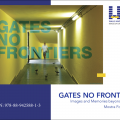
L'e-book Gates No Frontiers è uno degli output del progetto Walls and Integration: Images of Europe building Wai, presentato dal Comune di Macerata nell'ambito del  programma Europa per i cittadini, approvato dalla Commissione Europea e finanziato con un importo di 100.000 euro (cod. progetto 562858-CITIZ-1-2015-1-IT-CITIZ-REMEM - CUP I251I15000070001).

L'e-book così come tutte le altre attività di WAI sono state finanziate e rese possibili dal programma europeo Europa per i cittadini.

Di piu'...

Categoria: E-book
Produttore: ODG Edizioni

Gates No Frontiers is one of the outputs of Walls and Integration: Images of Europe building (WAI), a project, presented by the Municipality of Macerata (Comune di Macerata) of within the Europe for Citizens Program and approved by the European Commission. It gained funding for one hundred thousand Euros (project code 562858-CITIZ-1-2015-1-IT-CITIZ-REMEM - CUP I251I15000070001).

The e-book collects the materials, the pictures and the results of the research for the travelling exhibit, "Gates no frontiers"!

This e-book, realized for the WAI project, are freely downloadable from the WAI website!

Di piu'...

Categoria: E-book
Produttore: ODG Edizioni

Manuale per insegnanti ed educatori che raccoglie strategie e azioni per prevenire, mitigare e contrastare il bullismo e il cyberbullismo


Di piu'...

Categoria: E-book
Produttore: ODG Edizioni

Teorie e pratiche didattiche in contesto migratorio

Di piu'...

Categoria: E-book
Produttore: ODG Edizioni
Prezzo: 5,00 €

Riflessioni e buone pratiche

Di piu'...

Come avere i volumi delle ODG Edizioni?

Per contatti e informazioni: 

educazione@osservatoriodigenere.com

Per concordare un appuntamento Tel. +39 351 893 0932


Diventa socio dell'Osservatorio di Genere e tesserandoti potrai sostenere l'associazione con un contributo che potrai versare con

- Bonifico intestato a:

Osservatorio di Genere 

IBAN: IT11 C030 6909 6061 0000 0017 941 


- Paypal: odg@osservatoriodigenere.com o attraverso il modulo presente nel riquadro qui in basso, se ci si connette da pc o notebook, o in fondo alla pagina, se ci si connette con smartphone o altro dispositivo mobile, cliccando sul pulsante giallo "donazione"


- Direttamente nella sede dell'Osservatorio di Genere

via Marche, 84 - Macerata

Tel. +39 351 893 0932


- Durante gli eventi pubblici dell'OdG 

Sostieni l'Osservatorio

Sostieni le attività dell'Osservatorio di Genere. In pochi passaggi sarà possibile effettuare la tua donazione, il tuo contributo al crowfunding o il versamento della quota associativa in modo del tutto sicuro. Per tesserarsi, compilare il modulo presente nella sezione aposita del sito.

Newsletter

Notizie dalla rete